Tahatū
Helping young people navigate their careers

Overview
Background
New Zealand's primary careers website required content to be manually updated – which was time consuming and hard to keep up to date. User feedback and testing also showed it was difficult to navigate and not serving the people who needed it most.
Role
I led research that helped shape the product vision and feature roadmap during discovery. I also led UX design for 2 key features and co-ordinated a design team of 10+ to stay aligned across 5 moving features.
I helped set the design direction and built the design system used across the programme. I played a key role in building trust with clients to unblock key decisions needed to progress design delivery throughout.
Challenge
Transforming a large database into a tool that meaningfully surfaces opportunities
Discovery
Using research to drive strategic decisions
An existing research review helped prioritise our primary audience: Māori and Pasifika 10–17 year olds. To improve outcomes for this audience, we took a culturally affirming approach and applied the Decolonised Research Framework throughout the research process. This shaped every design decision to meet the needs of our primary audience.
%20copy.png)
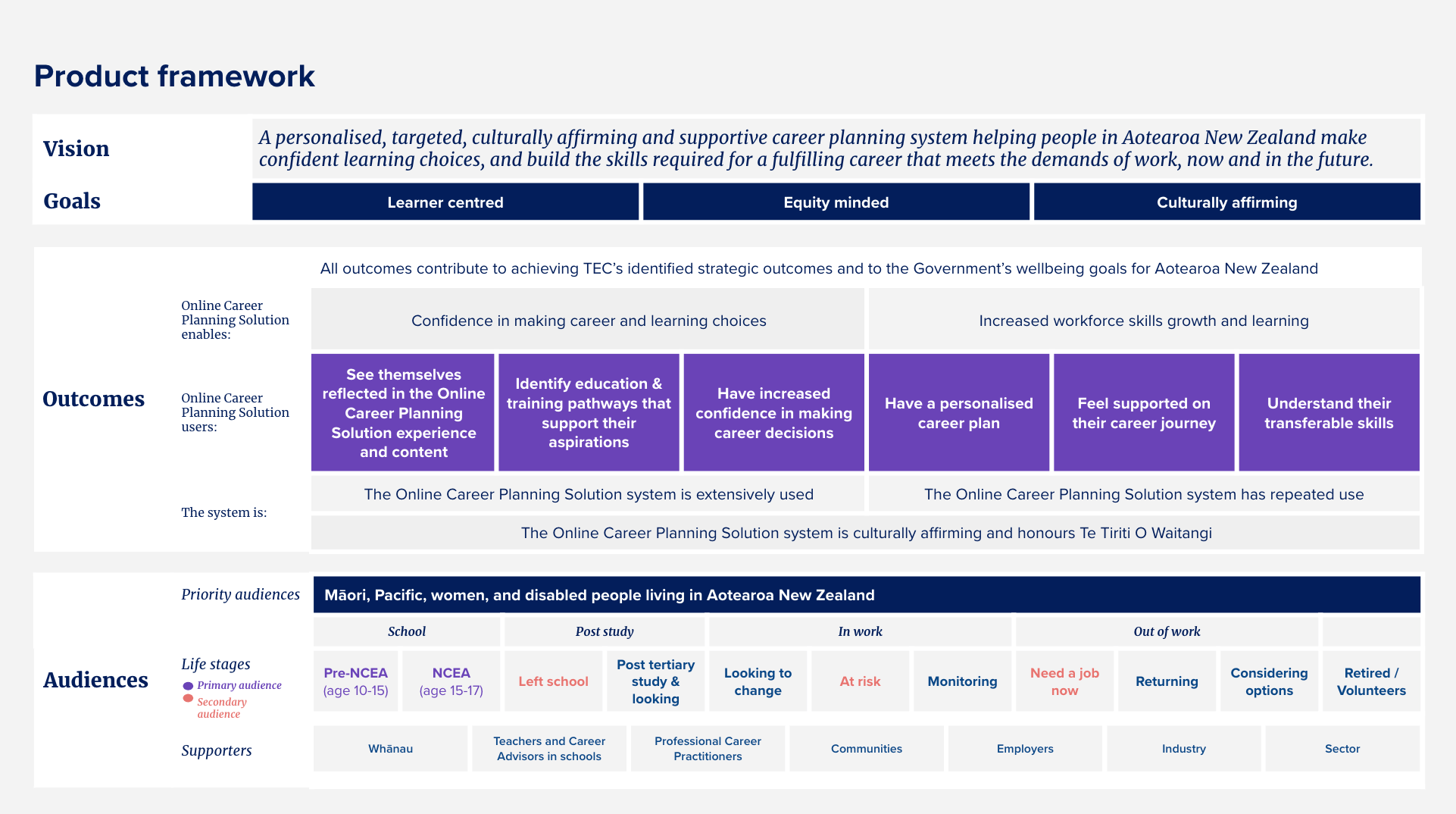
Understanding how data could support user needs
I facilitated interviews and workshops with young people and their families to understand information they needed, when they needed it and why.
A key activity called 'build your world' helped the programme understand how young people envisioned their futures and would genuinely support them. This informed key opportunities such as using skills, values, interests, culture and role models to show potiential opportunities and career pathways.


Rapidly testing ideas through low-fidelity prototypes
To move quickly from research to testable concepts, I sketched low-fidelity wireframes that could be put in front of users early. These weren't polished – they were tools for learning, helping us test assumptions, take stakeholders on the journey and plan what we needed to build.

Design
Turning a large database into intuitive experiences
With a large content database covering subjects, qualifications and careers – the information architecture was one of the biggest design challenges on the programme.
I used object-oriented UX (OOUX) and wireframes to explore how a large amount of content could be structured to meet different user needs – whether a student exploring broadly or a parent looking up a specific qualification pathway.


Accelerating delivery through a robust design system
Alongside another Experience Designer, I built an accessible design system that aligned the team, reduced rework and sped up delivery across five parallel workstreams.
The system was built with WCAG accessibility standards central to every decision – reflecting the commitment to designing for the young people who needed the platform most, including those with disabilities.

Outcomes
A platform successfully used in all schools
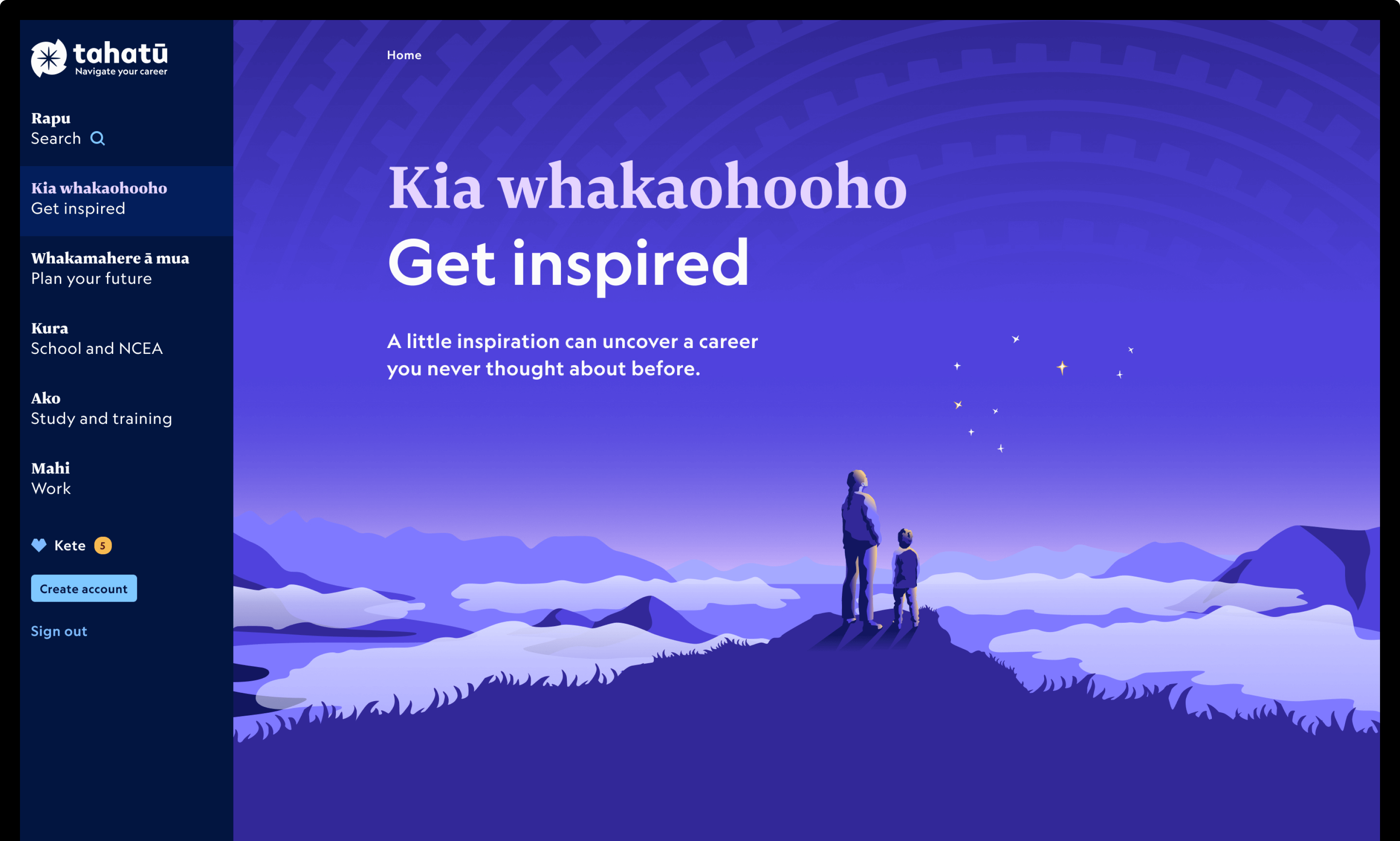
Tahatū now features over 800 career ideas, nearly 100 school subjects and more than 4000 tertiary qualifications in one place. It offers interactive tools to help people explore their interests and match them with study, training and work options at any stage of life.
Tahatū is already helping students navigate their careers, and dream of where their unique skills and interests could take them. Its pilot in schools across the country was hugely successful, with students especially loving the ‘Get inspired’ section, and the self-discovery resources such as the quiz, values and skills worksheets, and guide pages.
The tool itself is also easier to maintain – relying on easy to update databases rather than manually updating written content.
"Young people are loving that because they can see themselves on Tahatū in ways they haven't been able to articulate"
– Nina Ive, Deputy Chief Executive, Tertiary Education Commission